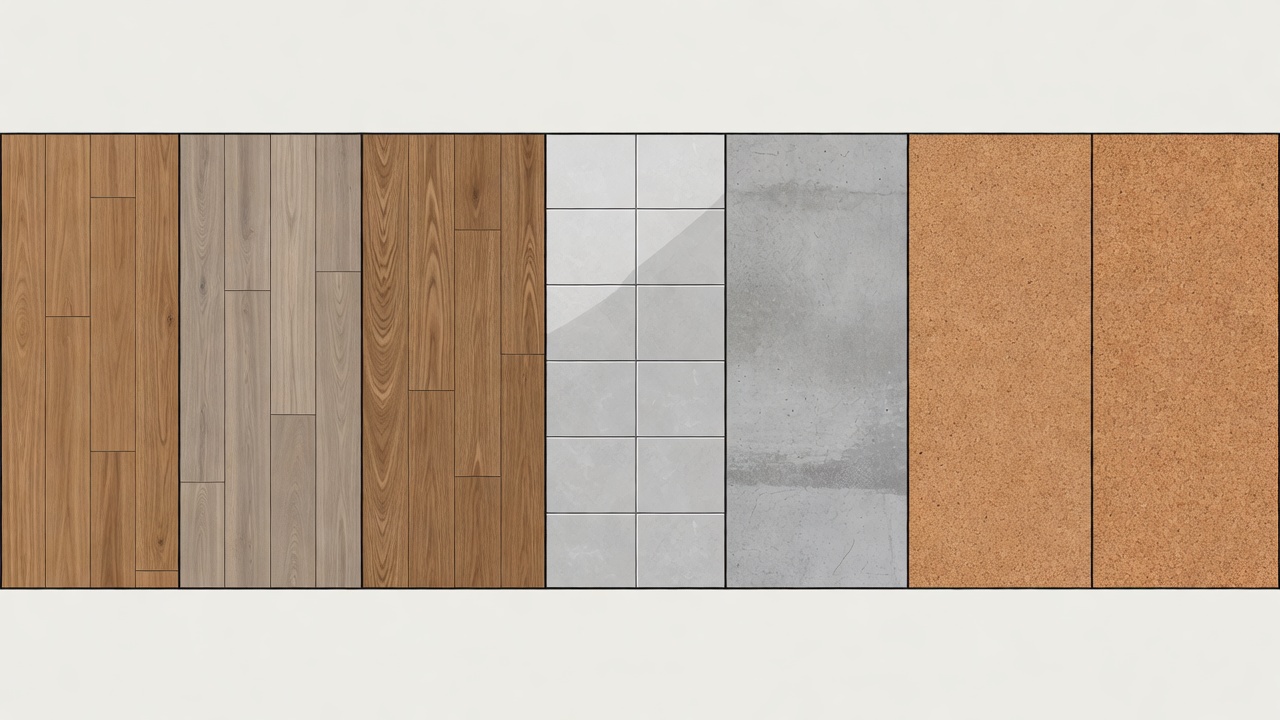
Seven floors compared
There is no best floor — only the best floor for a particular room. A kitchen needs water resistance; a hallway needs scratch resistance; a bedroom benefits from warmth and quiet. The table summarizes typical performance. Lifespans assume normal residential use and sensible maintenance.
| Floor | Water | Durability | Comfort | Lifespan | Price |
|---|---|---|---|---|---|
| Solid hardwood | Low | High; sand many times | Warm | 50+ yrs | $$$ |
| Engineered wood | Moderate | Med–high; 1–3 refinishes | Warm | 20–40 yrs | $$–$$$ |
| Luxury vinyl plank (rigid core) | High | High; depends on wear layer | Medium | 15–25 yrs | $$ |
| Laminate | Moderate | Rated AC1–AC5 | Medium | 15–25 yrs | $–$$ |
| Porcelain tile | Excellent | Very high | Cold, hard | 50+ yrs | $$–$$$ |
| Polished concrete | High | Very high | Hard | 50+ yrs | $$ |
| Cork | Moderate | Medium | Soft, quiet | 20–30 yrs | $$ |
Reading the ratings. Wood hardness is measured on the Janka scale, the force needed to embed a steel ball halfway into the wood. Red oak scores about 1,290 lbf, white oak about 1,360, hard maple about 1,450 and hickory about 1,820 — useful if you have large dogs. Laminate uses the AC abrasion rating: AC3 suits most homes, AC4 and AC5 handle heavy traffic. For vinyl, a wear layer of 12 mil or more is sensible for family homes, 20 mil for busy households.
Health and sourcing. Look for FloorScore certification, which tests resilient flooring for indoor air emissions, and FSC certification for responsibly sourced timber. Let wood and laminate acclimatize in the room for 48–72 hours before installation, as most manufacturers instruct.
Living rooms & bedrooms: engineered oak
Real timber surface, more stable than solid boards over underfloor heating.
Kitchens: rigid-core LVP or porcelain
Both shrug off spills; porcelain lasts longer, LVP is warmer and kinder to dropped glasses.
Bathrooms: porcelain tile
Choose a slip-resistant finish and consider electric underfloor heating.
Home offices & kids' rooms: cork
Quiet underfoot and forgiving for long hours of standing or play.
Lighting trends and the basics behind them
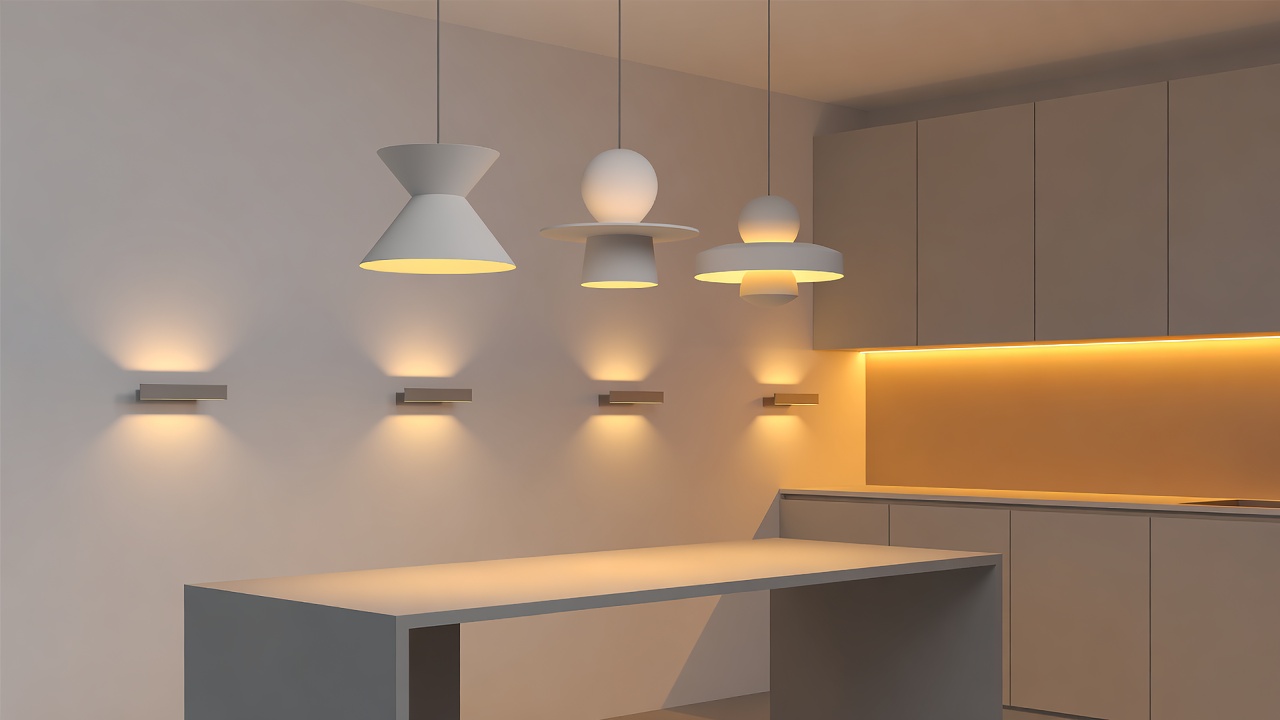
Good lighting is layered. Ambient light fills the room, task light illuminates worktops, desks and mirrors, and accent light picks out art, shelving or texture. Rooms that rely on a single ceiling fixture feel flat because every surface receives the same light from the same angle.
Color temperature is measured in Kelvin. 2700K feels warm and suits living rooms and bedrooms; 3000K is a crisp-but-friendly choice for kitchens and dining; 3500–4000K works for home offices, utility rooms and garages. Mixing temperatures within one room usually looks accidental, so pick one per space.
Color rendering index (CRI) describes how faithfully a light source shows colors, out of 100. Aim for CRI 90 or above anywhere you choose paint, cook or apply makeup. For brightness, a common rule of thumb is around 10–20 lumens per square foot for living spaces and 30–40 for kitchens and bathrooms. ENERGY STAR-certified LEDs combine low energy use with tested lifespans.
Warm-dim LEDs
They shift warmer as you dim, just like old incandescent bulbs — the most livable lighting upgrade available.
Sculptural pendants
Oversized paper, glass and ribbed forms act as art. Hang 75–90 cm (30–36 in) above an island or table.
Hidden LED profiles
Aluminum channels with diffusers create seamless lines under cabinets, along shelves and in ceiling coves.
Plug-in wall sconces
A renter-friendly way to add a layer without chasing cables into plaster.
Matter-compatible smart controls
The Matter standard from the Connectivity Standards Alliance lets bulbs and switches from different brands work together.