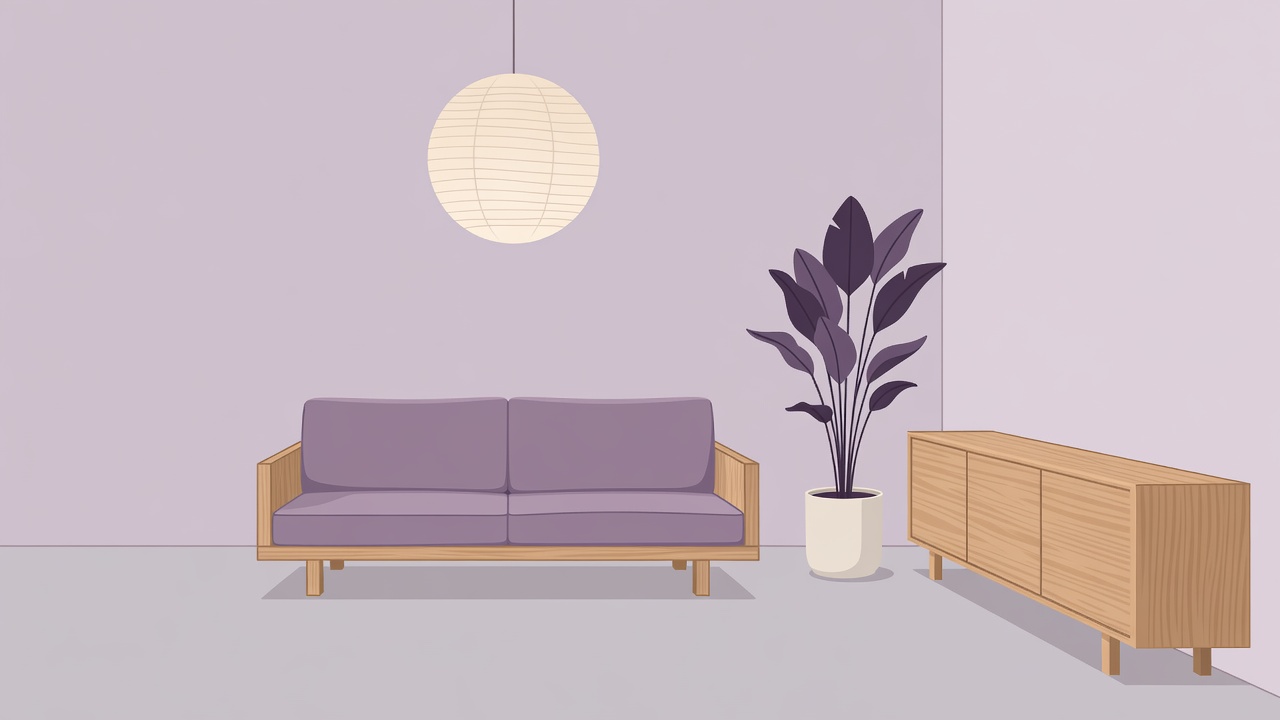
Six living room styles, scored
We scored each style out of ten on four criteria: livability (does it work with kids, pets and clutter?), budget flexibility (can you achieve it gradually and affordably?), longevity (how fast will it date?) and maintenance (how much cleaning and fussing does it demand?). The overall score is the average.
| Style | Livability | Budget | Longevity | Upkeep | Overall |
|---|---|---|---|---|---|
| Warm minimalism | 8 | 9 | 9 | 8 | 8.5 |
| Japandi | 8 | 7 | 9 | 8 | 8.0 |
| Modern organic | 8 | 7 | 8 | 7 | 7.5 |
| Mid-century modern | 7 | 6 | 9 | 7 | 7.25 |
| Scandinavian | 8 | 8 | 7 | 6 | 7.25 |
| Eclectic maximalism | 7 | 7 | 6 | 5 | 6.25 |
Warm minimalism
Minimalism without the chill: plaster-white or soft limewash walls, rounded furniture, wool, linen and a few well-chosen objects. Easy to build slowly from what you already own.
Japandi
Low, grounded furniture, pale oak, paper lanterns and a strict edit of decor. Its calm comes from storage — closed cabinets do the heavy lifting.
Modern organic
Curving silhouettes, boucle and travertine, plenty of plants. Gentle and welcoming, though natural stone pieces push budgets up.
Mid-century modern
Teak, tapered legs and icons such as the Eames Lounge Chair, introduced by Herman Miller in 1956. Timeless, but authentic pieces are expensive and reproductions vary in quality.
Scandinavian
Bright, practical and rooted in the Danish idea of hygge. White floors and pale upholstery are its weak spot in busy homes.
Eclectic maximalism
Pattern on pattern, collected art and William Morris-style prints. Joyful when curated; chaotic when not. It takes the most editing skill.
Layout measurements that work in any style
Leave roughly 45 cm (18 in) between sofa and coffee table — close enough to reach a mug, far enough for knees. Keep main walkways around 75–90 cm (30–36 in) wide. Choose a rug large enough for at least the front legs of every seat to rest on it; an undersized rug is the most common living room mistake we see.
Bedroom color schemes that feel restful
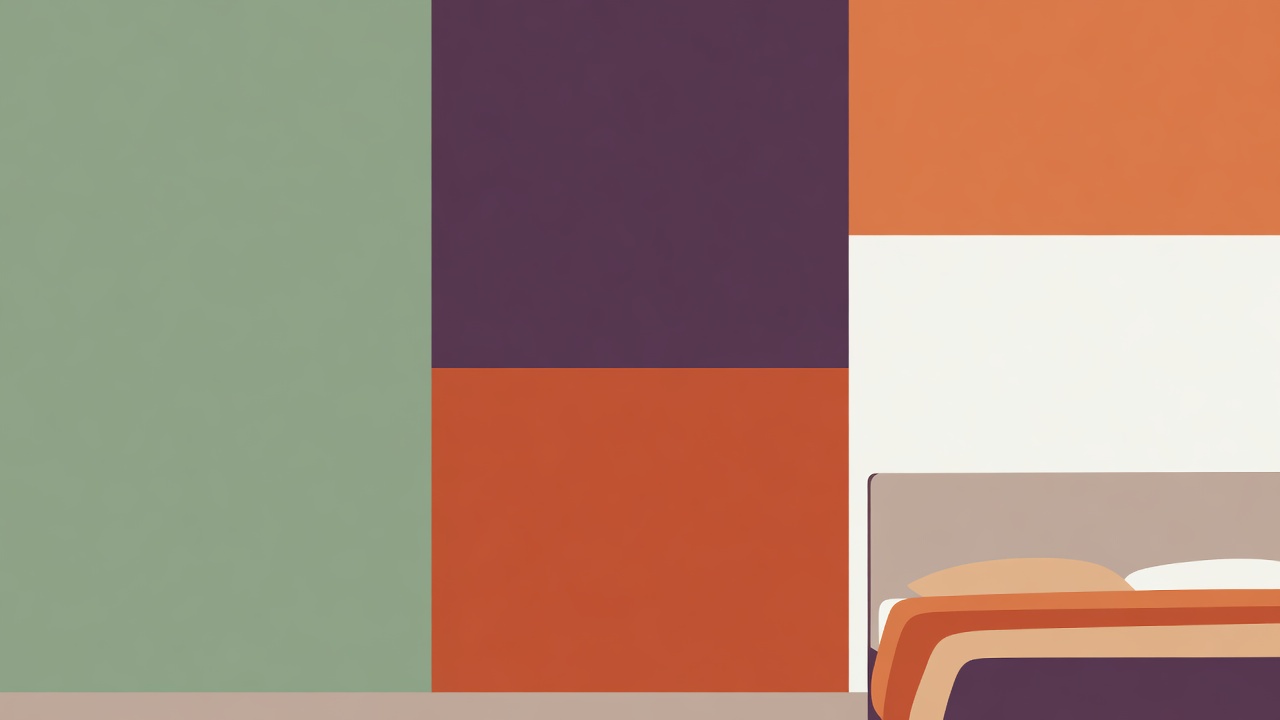
Claims that a particular color guarantees better sleep go beyond the evidence. What we can say confidently is that low-contrast, slightly muted palettes tend to feel calmer, and that the light in a room changes a paint color more than the color chart suggests.
Start with the 60-30-10 rule: about 60% of the room in a dominant color (walls), 30% in a secondary color (bedding, curtains, a large chair) and 10% in an accent (cushions, art, a lamp). Then check the paint's light reflectance value (LRV), printed by most manufacturers on a 0–100 scale. North-facing rooms with cool light benefit from warmer colors with a mid-to-high LRV; sunny south-facing rooms can carry deeper shades.
Paint brands such as Farrow & Ball, Benjamin Moore and Sherwin-Williams all sell sample pots or peel-and-stick swatches. Paint an A4-sized patch on two different walls and look at it in morning, afternoon and lamp light. Pantone's Color of the Year for 2025, Mocha Mousse, nudged many palettes toward warm browns — a trend that suits bedrooms well.
Sage & oat
Soft grey-green walls with oatmeal linen. Works in almost any light — our top pick.
Plum & blush
Deep aubergine on one wall or the whole room, softened with blush textiles. Cocooning in small rooms.
Terracotta & cream
Earthy warmth that flatters cool, north-facing rooms.
Charcoal & brass
Dramatic and hotel-like. Needs good layered lighting to avoid feeling flat.
Layered warm whites
Three whites with different undertones on walls, trim and ceiling. Quietly sophisticated.
Finish choice matters too: a flat or matte finish hides wall imperfections and suits ceilings, while eggshell is more wipeable for walls. Pair any scheme with 2700K bulbs for bedside and ambient light.